Full disclosure: I did not pay for this car. When Rlaarlo reached out, I told them explicitly that I would not endorse a product I didn’t believe was a good fit for the hobby. Everything below is my honest take.
How this started
About a month before launch, Rlaarlo, a Chinese manufacturer I had never heard of, reached out about collaborating on the release of their new XDX RTR 1/10 scale drift car. I’ll be honest: I was skeptical. The only images we’d seen looked AI-generated, and some of them didn’t quite make sense.
Before sharing any of my information, I did my homework. Rlaarlo mostly works in other niche hobbies and has mixed reviews, but there are real, verifiable customers out there who are genuinely enthusiastic about their products. Then shipping took longer than expected, and for a while I wondered whether the car was real or whether I’d walked into some kind of scam. After a few weeks of delay, it finally showed up at my door, and I tore into it right away.
Unboxing and first impressions
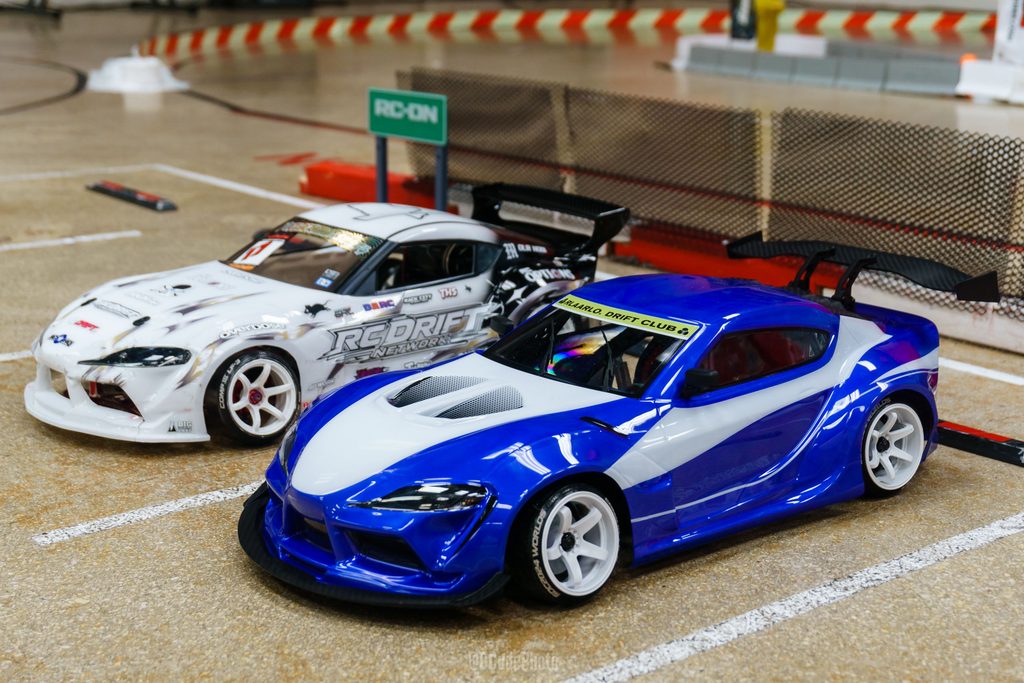
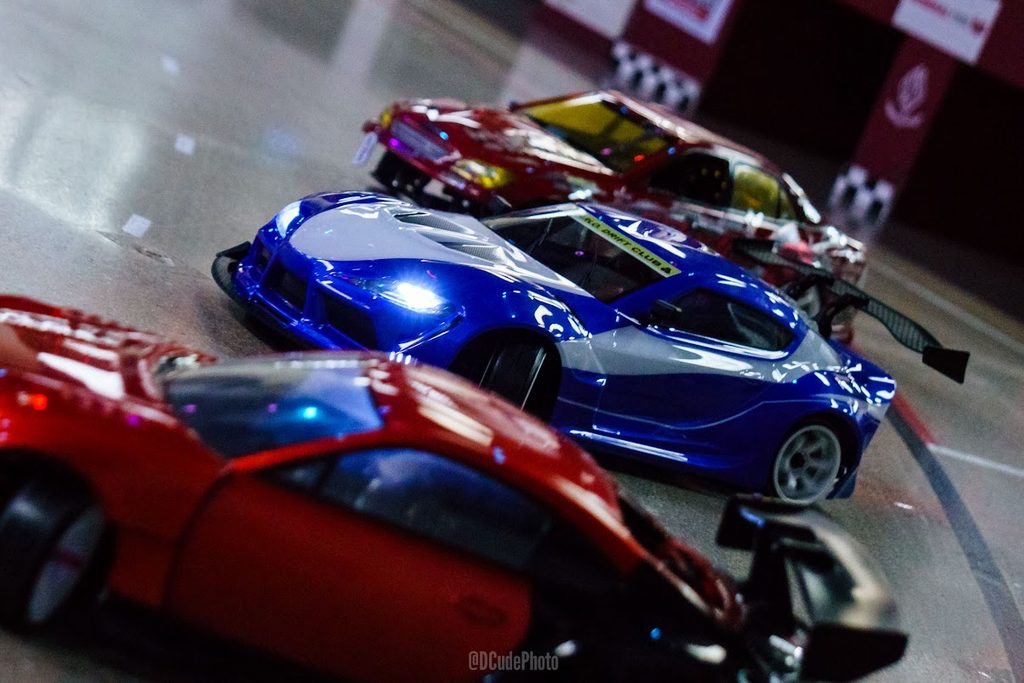
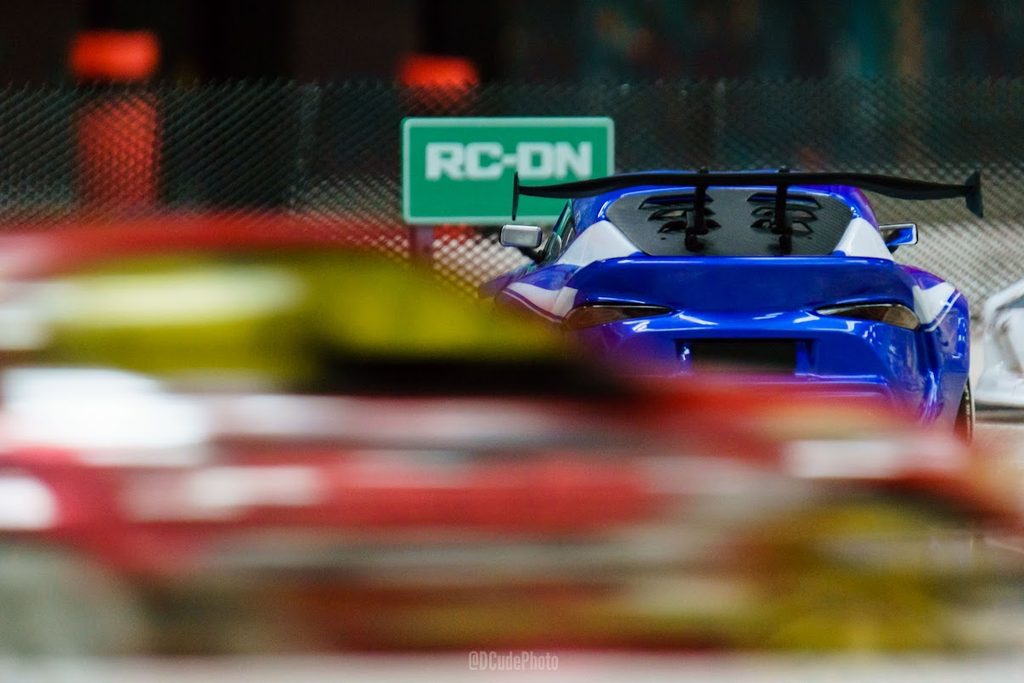
The first thing I noticed was the body. The shell is thicker and higher quality than I expected. Between the weight of the light kit, the extra aero, and the thick Lexan, it’s clearly built to take a beating. That makes it a great shell for a beginner or a rental fleet, but if this were my personal car, I’d swap to something much lighter.
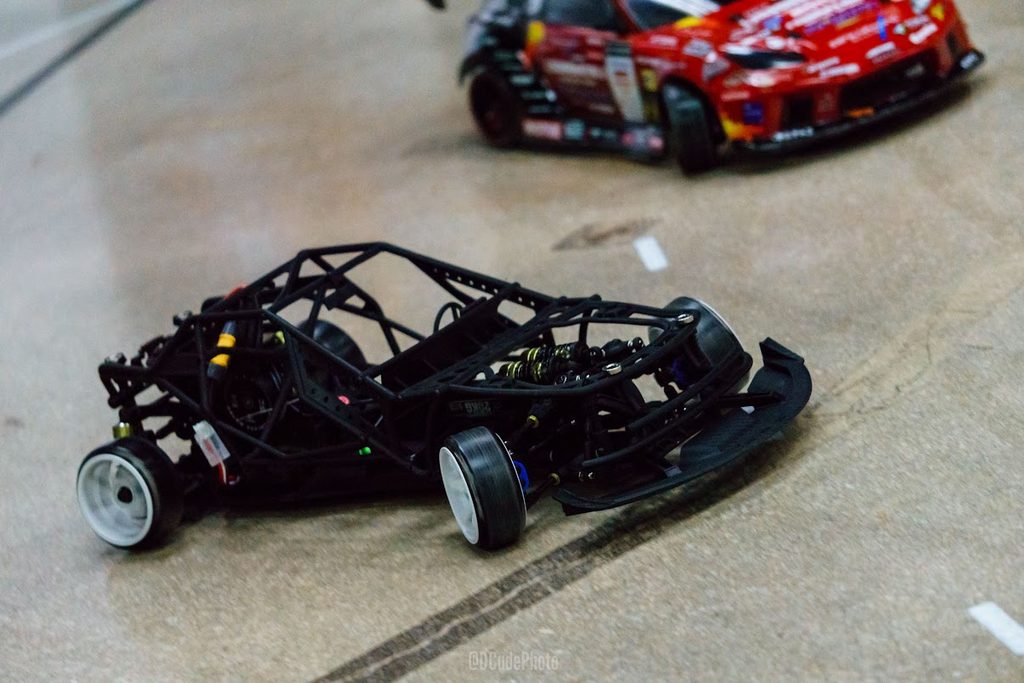
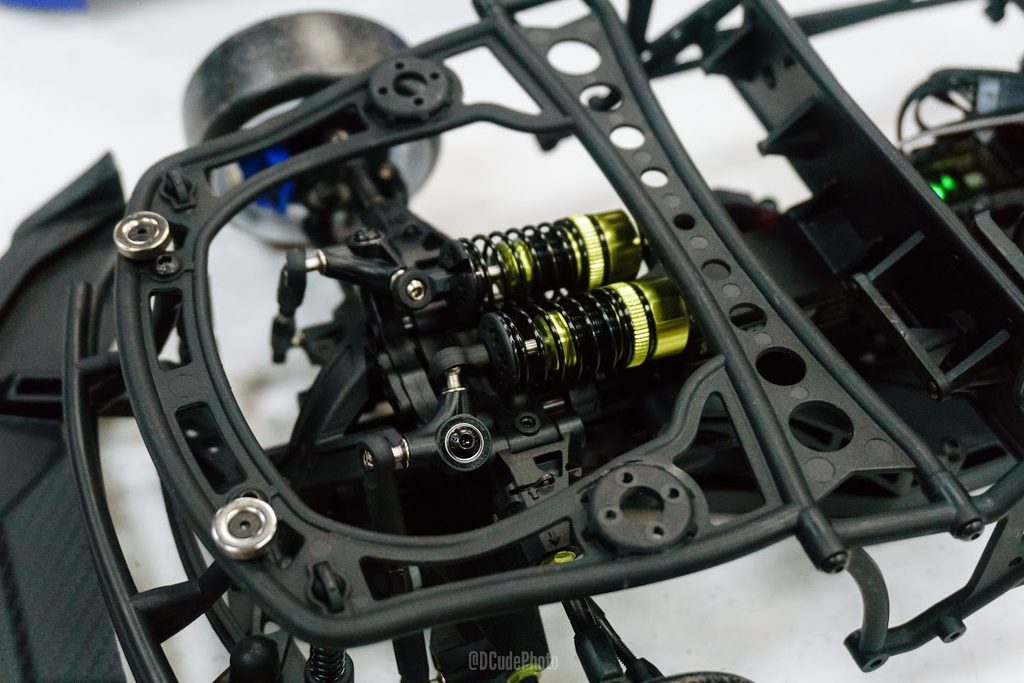
The scale details impressed me: working lights with multiple modes, good-looking wheels, and the thing that grabs everyone’s attention, the roll cage.
Wheels and tires
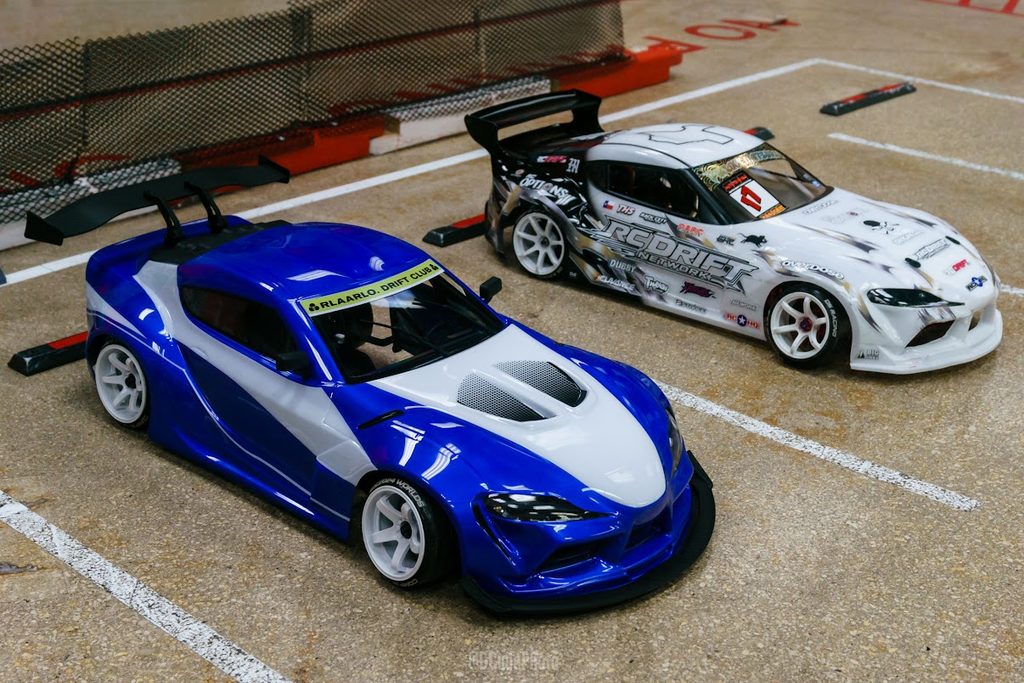
I dropped in batteries and started playing with it in my garage and kitchen on concrete and tile. The stock threaded hard plastic tires worked fine on both surfaces, but I swapped them out quickly, partly to save the stock tires and partly to see whether standard drift wheels and tires would fit.
They do. I mounted a set of standard 6 mm offset drift wheels with 26 mm tires with no issues. One note: the box stock car runs 30 mm tires in the rear, so if you want to keep that aggressive, full-fender look, you’ll need a 30 mm wheel and tire. The lost fill didn’t bother me much.
Maiden voyage at RCHQ
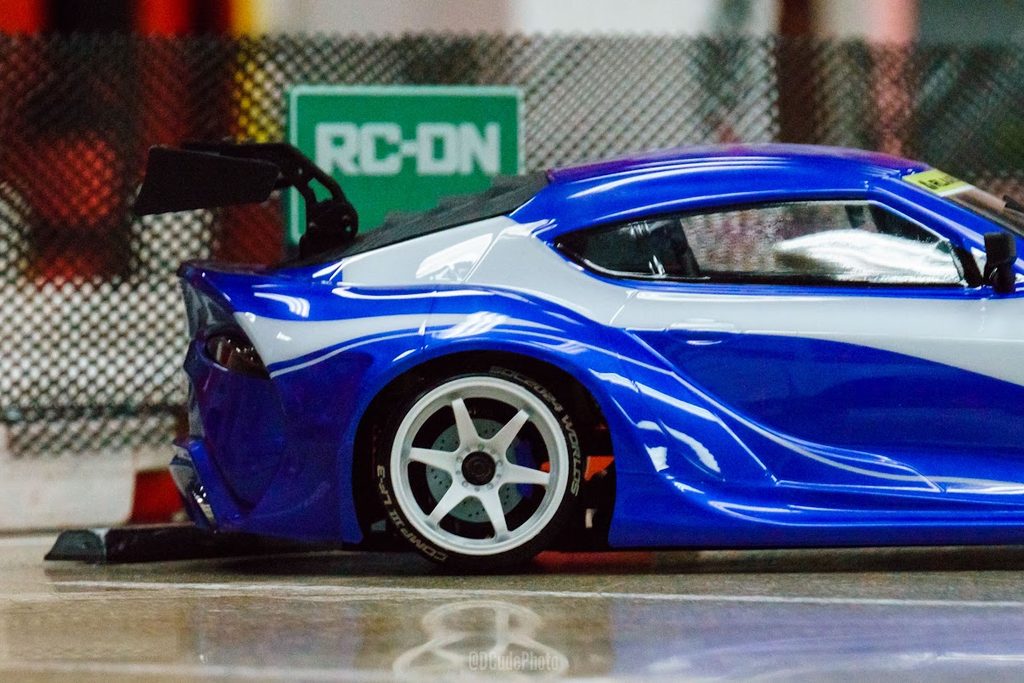
I took the car to RCHQ for its first real track session. Right away there was quite a bit of servo hunting, so after two laps I brought it in and did a basic front and rear alignment.
- Ackermann: The Ackermann crossed over around three-quarters of the way through the steering sweep. Adding 2° of toe-out up front corrected it.
- Gyro baseline: I set all three gyro dials to 50% and worked from there, adjusting each slightly.
- Final settings: Anti-glitch at roughly 75–80% stopped the gyro wobble, and I’m running gain around 80%.
With those changes, I was making laps alongside other drivers and even holding their door for a moment.
Important: how to adjust gyro gain
The stock electronics come paired to the included RTR transmitter, and gyro gain is controlled from the transmitter, not the third dial labeled “gain” on the gyro. To adjust it:
- Hold the wheels turned to the left.
- Press and hold the top-left button on the transmitter for two seconds, until the arrow pad blinks green.
- Use the throttle EPA dial (top left in the dial area) to set gyro gain.
A word of warning: the included instructions are fairly rudimentary and can be difficult to follow. It took me about 15 minutes to figure out how to adjust the gyro from the transmitter, so read them carefully before you start changing settings.
Out-of-the-box quirks
While setting my endpoints, the car locked up and would only steer in one direction. It took me about 15 minutes to get it sorted out, and honestly, I’m not exactly sure what fixed it. We’ve also seen some odd servo behavior on cars straight out of the box. Both people I spoke with who ran into it were eventually able to get their cars working again, but it’s worth knowing going in, especially for a newcomer who may not know where to start troubleshooting.
The electronics, and who this car is really for
The stock RTR electronics are better than other RTR packages I’ve seen, but they’re still underpowered. They’re a baseline to get your foot in the door.
What I’ve noticed is that a lot of the people interested in this chassis aren’t new drivers. For them, the RTR isn’t the best fit. Shortly after my unboxing, Rlaarlo announced a roller version, and for anyone with some RC experience, I think that’s the better option.
What I like
- Lots of adjustability right out of the box
- Strong attention to scale detail
- It’s something interesting, new, and refreshing in the market
The chassis and the brand have drawn plenty of skepticism, and some people have written it off as a cheap toy-grade gimmick. I’ll say this plainly: I was very impressed with what I received.
The questions that still need answers
Distribution and hobby shops. As a Chinese company, Rlaarlo may find it hard to build the kind of relationship and consistent communication US hobby shops need for a successful, profitable partnership. If this ends up as a direct-to-consumer item sold through AliExpress, Temu, or Amazon, it does very little for the local shops that provide the tracks and spaces where we actually use these cars. In a hobby where stores are squeezed for every penny, mutual collaboration is essential.
Durability. Newcomers tend to be rough on their first car. After about a week of testing we’ve had zero failures, but it’s mostly been driven by decent drivers. I’ll know much more after the San Antonio Auto & Truck Show, where the general public will be driving it all weekend across three days.
Parts availability. If something breaks, how long will replacements take, and can we get them stateside, or is it order-from-China-and-wait? Availability drives purchase decisions in this hobby. When I started, I broke a few things in the first month, and having parts available locally is what kept me coming back to the track instead of losing interest while I waited on the mail. Asking a brand-new driver to wait weeks for parts isn’t realistic.
Bottom line
The XDX genuinely surprised me. If Rlaarlo builds a clear path for US distribution and customer support, I’d be comfortable recommending this chassis to newcomers. Until those questions are answered, my general recommendation for new drivers remains the HPI D10.
I’ll post an update on durability after the auto show.